How to choose a skin protection program for your workplace
This article explains how to choose a simple, practical skin protection program that fits the work and gets used.
Where to start when choosing a skin protection plan for your workplace? With the risk your team actually faces day to day. An effective skin protection plan combines protection, cleansing and skin care into one simple-to-follow routine. It should be reviewed regularly, ideally together with your employees, to ensure it matches with the way they actually work. In this article, we'll help you choose a skin protection plan that works in practice.
Contents
Skin health in the workplace 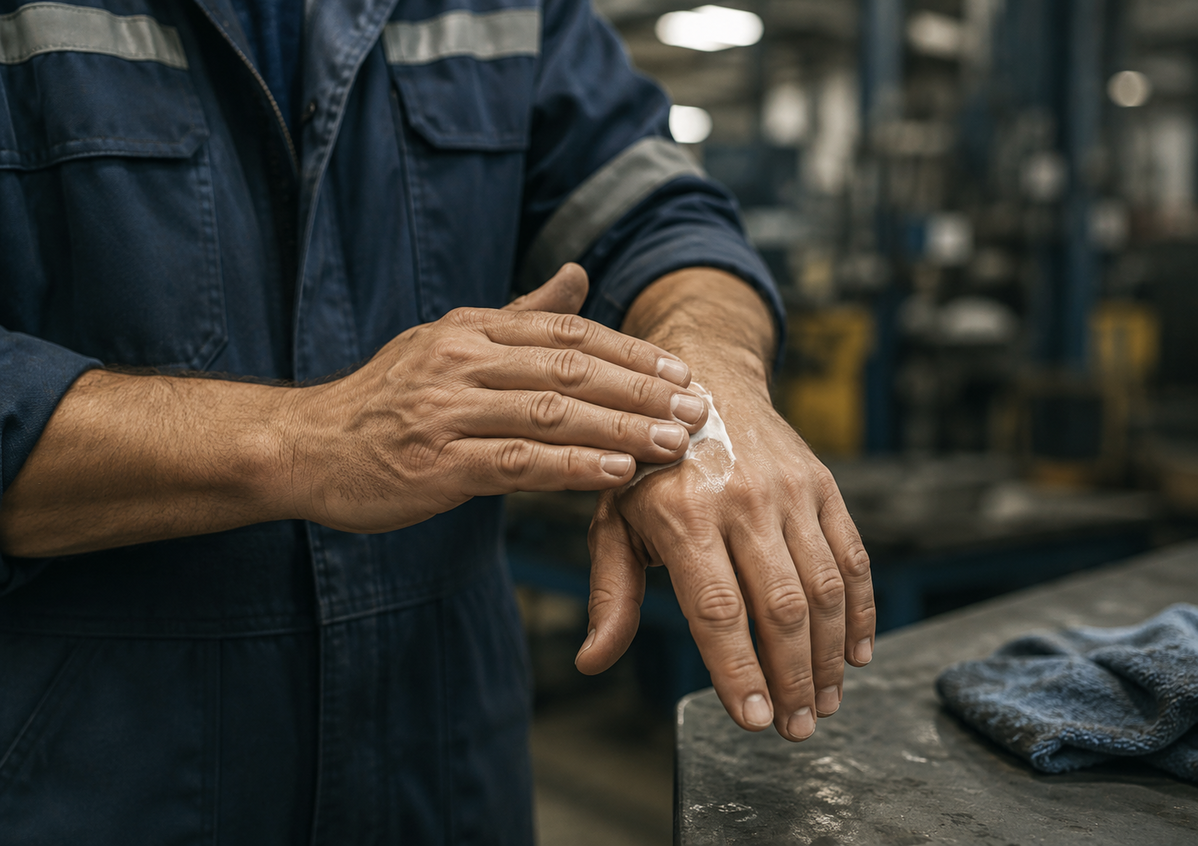
Skin health rarely makes the same list as protective gear, such as safety glasses, helmets and hearing protection. Or as machine guarding or ergonomics. Yet our skin is our body's largest organ and its first line of defence against everything your team's hands come into contact with all day. We've covered the full case for why that matters, and what the numbers say, in our guide to skin protection, cleansing and care in the workplace. Here, we'll look at the practical side of things: how do you actually choose a program that fits your business operations?
Every workplace is different, the products don't have to be
There's no single skin protection setup that works everywhere, because the exposures aren't the same from one site to the next. But there’s also no need to get lost in the wide range of skin protection products.
- Food production: constant moisture, frequent handwashing, disinfectants, long glove use
- Manufacturing: oils, solvents, metal dust, mechanical stress on the skin
- Healthcare: frequent disinfection, extended glove wear, high hygiene standards
- Logistics and warehousing: variable exposure, temperature swings, outdoor work
- Cleaning: concentrated chemicals, prolonged contact with water and detergents
Start with understanding the risks
 Before choosing a skin protection program, it’s important to first thoroughly assess what actually happens in the workplace: what substances the hands come into contact with, how often hands are washed, how long gloves are worn continuously, and what a typical shift looks like from start to finish.
For example, both wet work lasting more than two hours a day and frequent handwashing during a shift are recognized as risk factors for skin problems, regardless of the country in which you work. Your assessment doesn't need to end in a shopping list of different creams and products. Think of it as the foundation for setting up the program: where the dispensers should be placed, how often they should be refilled, and which cleaning product is suitable for the environment.