
Create a risk assessment
The fire safety risk assessment is a systematic analysis and evaluation of potential fire hazards in work processes or in the building. The safety of people, property and the environment can be ensured through the fire safety risk assessment; it is a central tool for operational safety and prevention work.

Fire safety risk assessment
The Ordinance on Industrial Safety and Health places the responsibility for occupational safety and health in the hands of the employer. The risk assessment supports employers in this task. We now take a closer look at the process of risk assessment for fire protection.
Fire safety risk assessment procedure
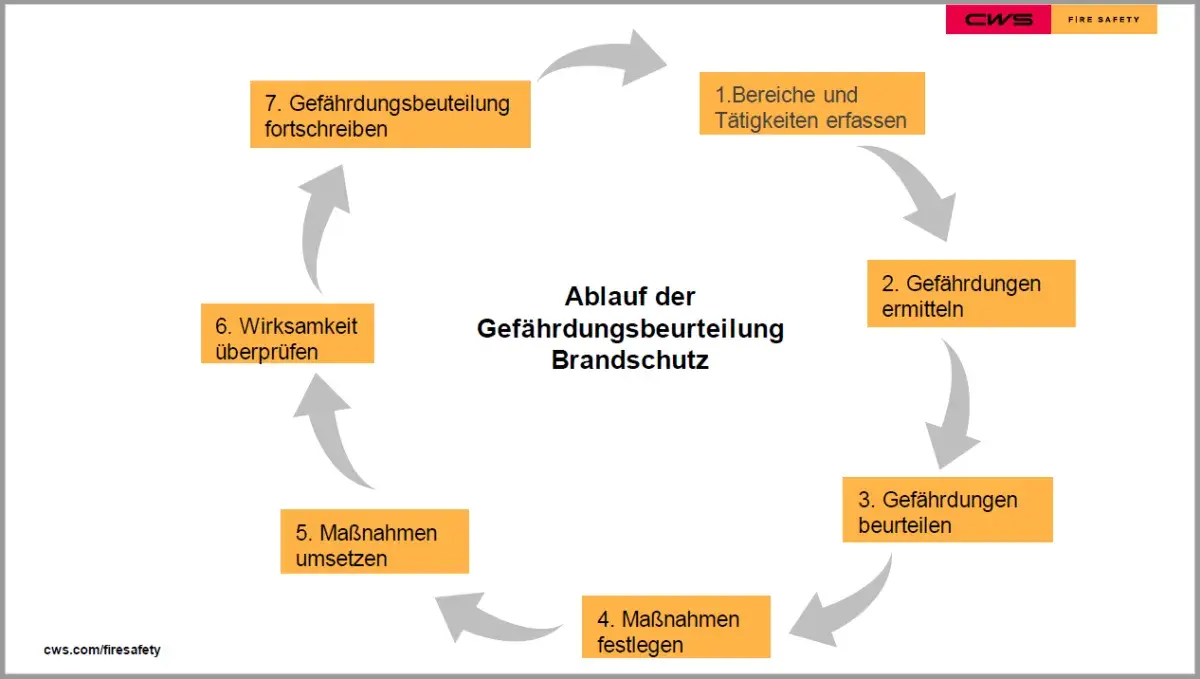
- Identify areas and activities
- Determine hazards
- Assess the hazard
- Determine protective measures
- Implement protective measures
- Check effectiveness of protective measures
- Update the risk assessment
Draw up a risk assessment: 1. record areas and activities
During the risk assessment inventory, all areas and activities are documented and information is collected.
Workplace areas include, for example, offices, production areas, storage rooms, kitchens, stairwells, etc. In these areas, the respective activity, use and fire protection equipment is recorded. This includes work processes, operation of machines, storage of materials, handling of chemicals, use as an escape and rescue route, existing fire extinguishers, fire protection assistants, etc. Plans, documents, maintenance records and similar information are collected.

Draw up a risk assessment: 2. determine hazards
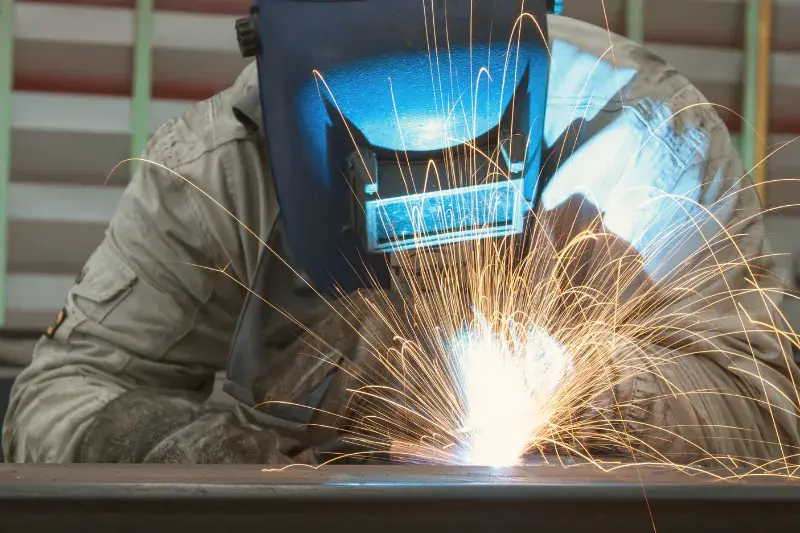
In phase 2 of the fire risk assessment, the fire hazards are identified in more detail. The areas and activities are combined and it is looked where e.g. hot surfaces or open flames occur, electrical equipment is used, flammable materials are used, etc.
Draw up a risk assessment: 3. assess hazards
The probability of a fire or explosion occurring is then defined. Factors such as frequency of activity, care of employees, maintenance of equipment or compliance with regulations play a relevant role. The probability of a fire can be classified as high, medium or low.
Draw up a risk assessment: 4. determine measures
In phase 4 of the risk assessment fire protection, suitable protective measures are determined to minimise or eliminate the identified risks. These can be technical, structural, organisational or personal protective measures.
- Technical: e.g. number of fire extinguishers, suitable extinguishing agents, smoke extraction systems.
- Structural: e.g. installation of fire doors, fire compartments, fire partitions.
- Organisational: e.g. number of fire protection assistants, training in handling flammable substances.
- Personal: e.g. personal protective equipment.
This impact of protective measures can be classified as high, medium and low.
Draw up a risk assessment: 5. implement measures
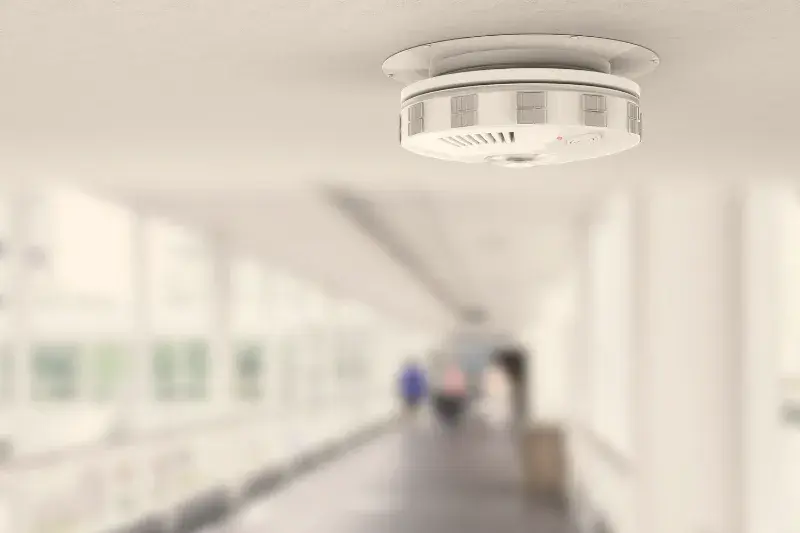
Protective measures should be prioritised based on the risk assessment. The protective measures that have a high risk and high effectiveness should be implemented first. All measures should be defined and implemented in a schedule including the required resources (budget, staff, equipment) and the respective responsibilities for implementation, monitoring and documentation.
Draw up a risk assessment: 6. check effectiveness of measures
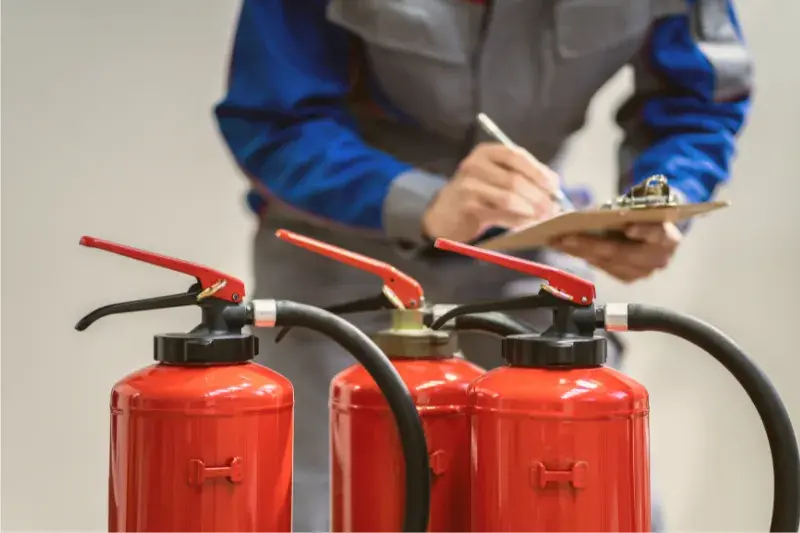
Regular visual inspections and compliance with maintenance intervals for the fire protection equipment ensure that the protective measures function in the event of a fire. Training should also be refreshed regularly. Emergency and evacuation drills consolidate what has been learned and, if necessary, show how to optimise it. A survey of employees or the assistance of an external fire protection officer can provide further insights.
Draw up a risk assessment: 7. update the risk assessment

If new hazards become apparent in the measures described above or if a need for improvement arises, these findings and information belong in the fire safety risk assessment in order to go through the process again and define suitable protective measures.
If you need assistance with the fire safety risk assessment, our experts will be happy to help you.
The time to prepare the risk assessment
The fire safety risk assessment is constantly reviewed and updated. Occasions include new or changed:
- Work procedures,
- work equipment,
- workplaces,
- legal regulations and technical rules as well as
- buildings or room layouts.
Especially after a fire, a fire safety risk assessment should be carried out to analyse the causes, identify possible gaps in the existing protective measures and take appropriate measures to improve them.
The documentation of the fire safety risk assessment is not only important internally, but also counts as evidence for authorities and insurance companies. There is no formal requirement for the documentation. As an electronic document, it must be available at all times and protected from access.
Support from the fire protection expert
Risk assessments are complex. They require broad knowledge of occupational safety, health, environmental and fire protection. Small and medium-sized companies rarely have the necessary expertise in-house. They can fall back on the CWS Fire Safety network. Larger companies benefit from the neutral view with which CWS Fire Safety's independent experts look at companies and make suggestions. Feel free to contact us!
